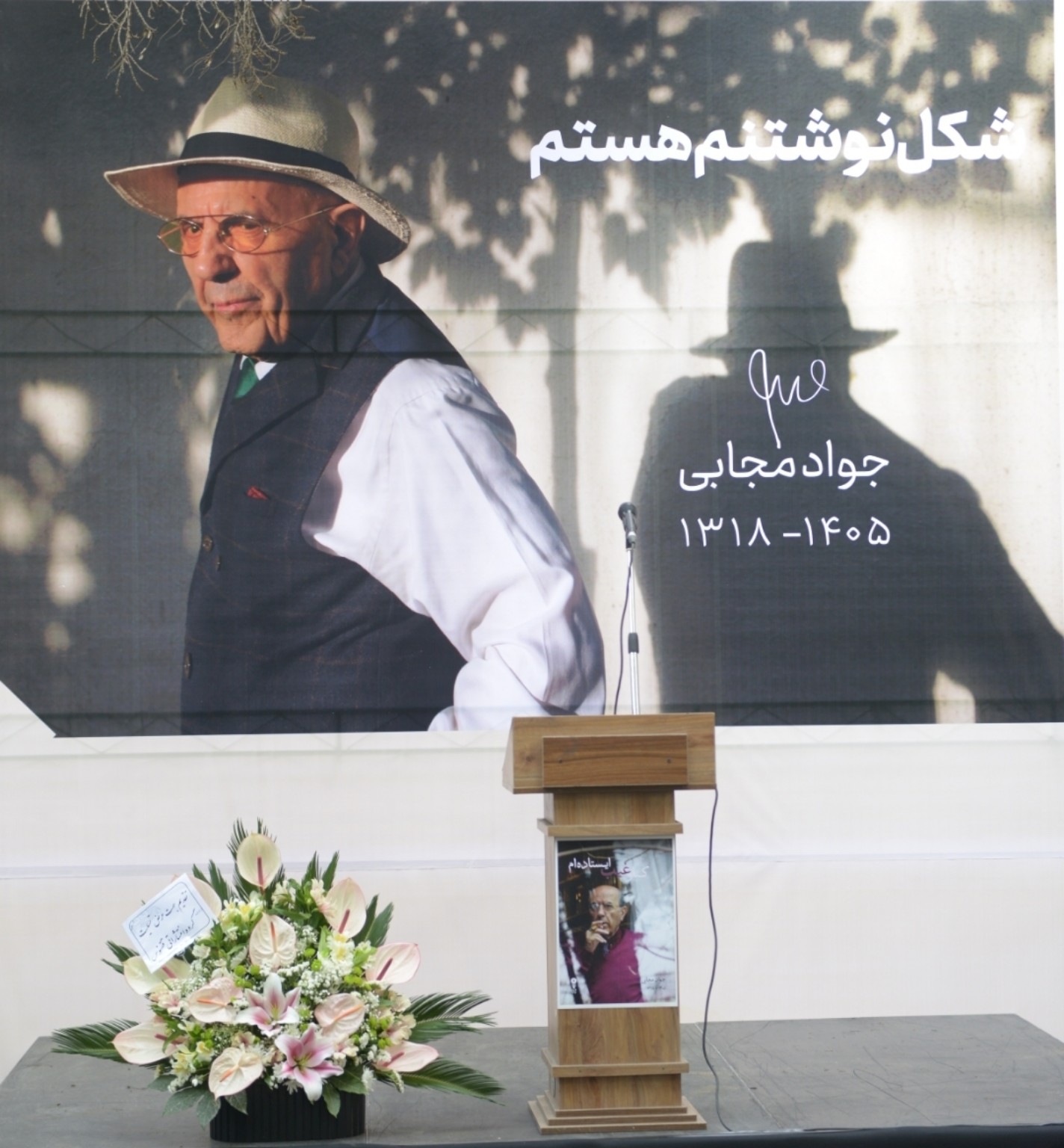
Javad Mojabi: Remembered in Words and Images
Poet, novelist, satirist, painter, and critic of literature and the visual arts
1939–2026
This memorial page recalls Mojabi’s life and creative work through a documented timeline of his illness, his family’s care, the farewell and burial ceremonies, and tributes by friends and members of the cultural community.
From illness to farewell
Events are presented chronologically and based on published reports. The exact onset of the illness was not specified in the sources; the first date below is the reported hospital admission.
- 2 May 2026 — Hospital admission.
According to a published report on his treatment, Javad Mojabi went to hospital on 2 May. This is the earliest reported date of his hospitalization; the sources do not establish when his illness first began. Honar Online, reporting on an ISNA account.
- 4 May 2026 — Surgery and continued medical care.
Surgery took place two days after his hospital visit, followed by continued hospitalization and medical care. This account is limited to information reported publicly. Honar Online / ISNA report.
- June–July 2026 — Continuing to create during treatment.
While hospitalized, Mojabi continued drawing and painting. Works from this period were later presented in The White Nights of the Hospital and Me, reflecting the connection between everyday life and artistic creation. Honar Online / ISNA report.
- 17–19 July 2026 — The White Nights of the Hospital and Me exhibition.
An exhibition of drawings and paintings made during treatment opened at Tehran’s Iranmehr Hospital and ran through 19 July. Abdolrahman Najl-Rahim, Nastin Mojabi, and Popak Mojabi spoke at the opening. A report published on 18 July also said Mojabi had been discharged and was at home. Honar Online / ISNA report.
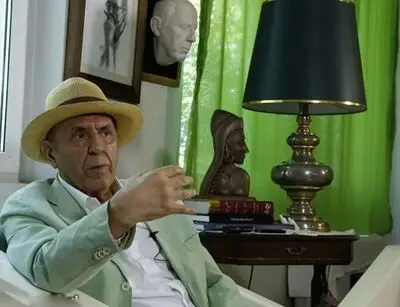
Image source: Honar Online / ISNA - 5 September 2026 — Death of Javad Mojabi.
Mojabi died in Tehran after a period of illness. His work in poetry, fiction, satire, art criticism, and painting remains part of Iran’s contemporary cultural heritage. Saba News, citing Khabar Online.
- 9 September 2026, morning — Farewell at the Writers’ Quarter.
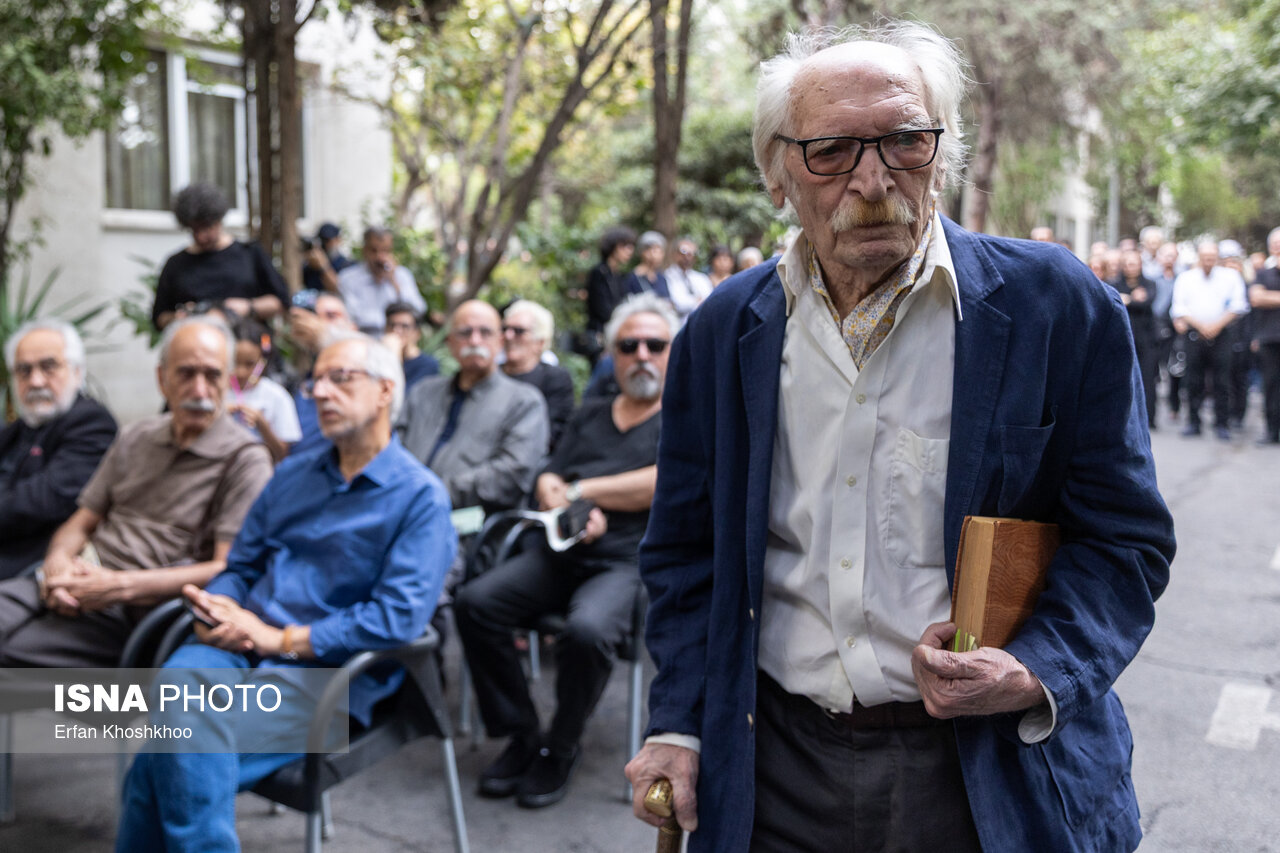
Family, friends, and members of the cultural and artistic community accompanied Mojabi’s coffin from his home in Tehran’s Writers’ Quarter. Speeches and poetry readings honored his life and cultural work. Bani Film, citing ISNA.
- 9 September 2026, midday — Burial at Imamzadeh Taher in Karaj.
Following the farewell, Javad Mojabi was buried at Imamzadeh Taher in Karaj. Bani Film / ISNA report.
- In the days after the burial — Friends visit the family.
According to the family’s statement quoted in a ceremony report, no separate gathering was planned after the burial. The family home welcomed friends and admirers for seven days to offer condolences and support. Saba News / Khabar Online.
Nastin and Popak’s care and companionship
Nastin Javadi (also known as Nastin Mojabi), Javad Mojabi’s wife, and Popak Mojabi, his daughter, stayed by his side during his illness and helped care for him. In a remembrance published on 6 September, Mahmoud Dowlatabadi recalled Nastin’s efforts to care for Mojabi and Popak’s presence from the beginning of this period. He also thanked the family at the farewell ceremony. Their care, alongside their longstanding family and cultural ties, forms part of the record of Mojabi’s final days.
Sources: Honar Online, Mahmoud Dowlatabadi’s remembrance; Saba News, farewell report.
Tributes and remembrances after his death
The following summaries present published tributes and remarks. Follow each source link for the full text or report.
Mahmoud Dowlatabadi: “A cheerful and tolerant friend” — 6 September 2026
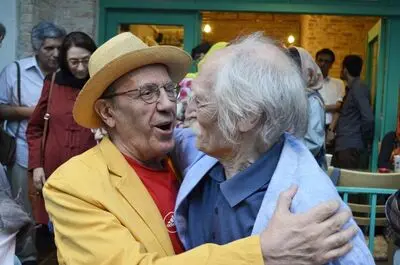
Dowlatabadi’s remembrance begins from a friendship that had lasted more than half a century and describes the loss from the perspective of someone who knew Mojabi closely. He recalls a cheerful, kind, and tolerant companion whose humor could resist despair, and presents his passing as a loss to the wider cultural community as well. The reflection places these personal qualities alongside Mojabi’s wide-ranging work in poetry, fiction, novels, satire, and art criticism. Dowlatabadi also acknowledges Nastin and Popak’s care during the illness and turns to the family’s grief after the farewell. The piece is both a personal elegy and a concise portrait of how character, friendship, and creative work came together in Mojabi’s life.
Source: Honar Online.
“Life and death in one’s homeland”: a look back at Mojabi’s career — 6 September 2026
Shargh’s “Life and Death in One’s Homeland” uses Mojabi’s passing to revisit the relationship between his life, his country, and his creative work. Rather than reducing him to a single role, the retrospective follows his work across poetry, fiction and novels, journalism, satire, painting, and art criticism. It presents his steady habits of reading and writing alongside his humor and attention to history, language, and the culture of ordinary people. The title’s reference to homeland frames the article’s larger reflection on belonging and cultural memory. Its account of work that continued during illness brings the final period of his life into the same story of sustained artistic practice.
Nastin Javadi: continuing a family’s cultural path — 9 September 2026
At the farewell ceremony, Nastin Javadi spoke of a cultural family life built over roughly fifty years and said that its work and values would continue. She thanked the friends and cultural figures who had stood with the family during Mojabi’s illness, describing a circle of support around them. Her reading of a ghazal by Rumi connected the ceremony to the classical poetry that she and Mojabi shared. These remarks held mourning and continuity together: they acknowledged the loss while looking toward the relationships and cultural work that remain. The report offers a glimpse of the family’s literary life as well as a public farewell.
Source: Saba News, citing Khabar Online.
Popak Mojabi: speaking through her father’s poems — 9 September 2026
At the farewell, Popak Mojabi chose to let her father speak through his poems rather than offer a long speech of her own. She described the work of compiling New Love Poems, a task entrusted to her while Mojabi was busy writing a novel. As she reviewed the poems, she saw three connected themes running through the collection: the beloved, the homeland, and friends who had died. She also recalled her father’s habit of reading new work to relatives and friends, asking for their views, and listening carefully to what they said. Her account links the book’s themes with the everyday conversations through which Mojabi shared and refined his writing.
Pouria Alami: a home for dialogue across generations — 9 September 2026
Alami began by recalling that he had planned to read from “The Blue-Eyed Boy,” but in the days before the ceremony he found himself thinking more about what Mojabi and Nastin had made possible for literature. He described their home as an unusually open place where a young writer, even one without a book or a reputation, could read, speak, be noticed, and listen. In his account, the home mattered because it brought people from different generations into contact without rigid status barriers. Alami’s tribute therefore describes a form of mentorship that took place through hospitality and conversation. It presents Mojabi’s legacy not only in books, but also in the opportunities he helped create for emerging writers.
Mahmoud Dowlatabadi: Mojabi’s command of classical Persian literature — 9 September 2026
At the farewell, Dowlatabadi highlighted Mojabi’s deep familiarity with classical Persian literature, a side of his work that he felt was mentioned less often. He recalled telephone conversations that could last forty-five minutes or an hour as Mojabi explained a single line from a classical ode. Dowlatabadi remembered listening as his friend unfolded the line’s meaning and, at times, its humor. The anecdote presents literary scholarship as part of an active friendship and a shared pleasure in close reading. It adds to the public image of Mojabi as a poet, novelist, and critic the portrait of a devoted reader and thoughtful interpreter of the Persian canon.
Memorial photo gallery
Images from the gathering of family, friends, and admirers. Each photograph is credited to Omid Tareh-Fard. Select an image to view it at full size.
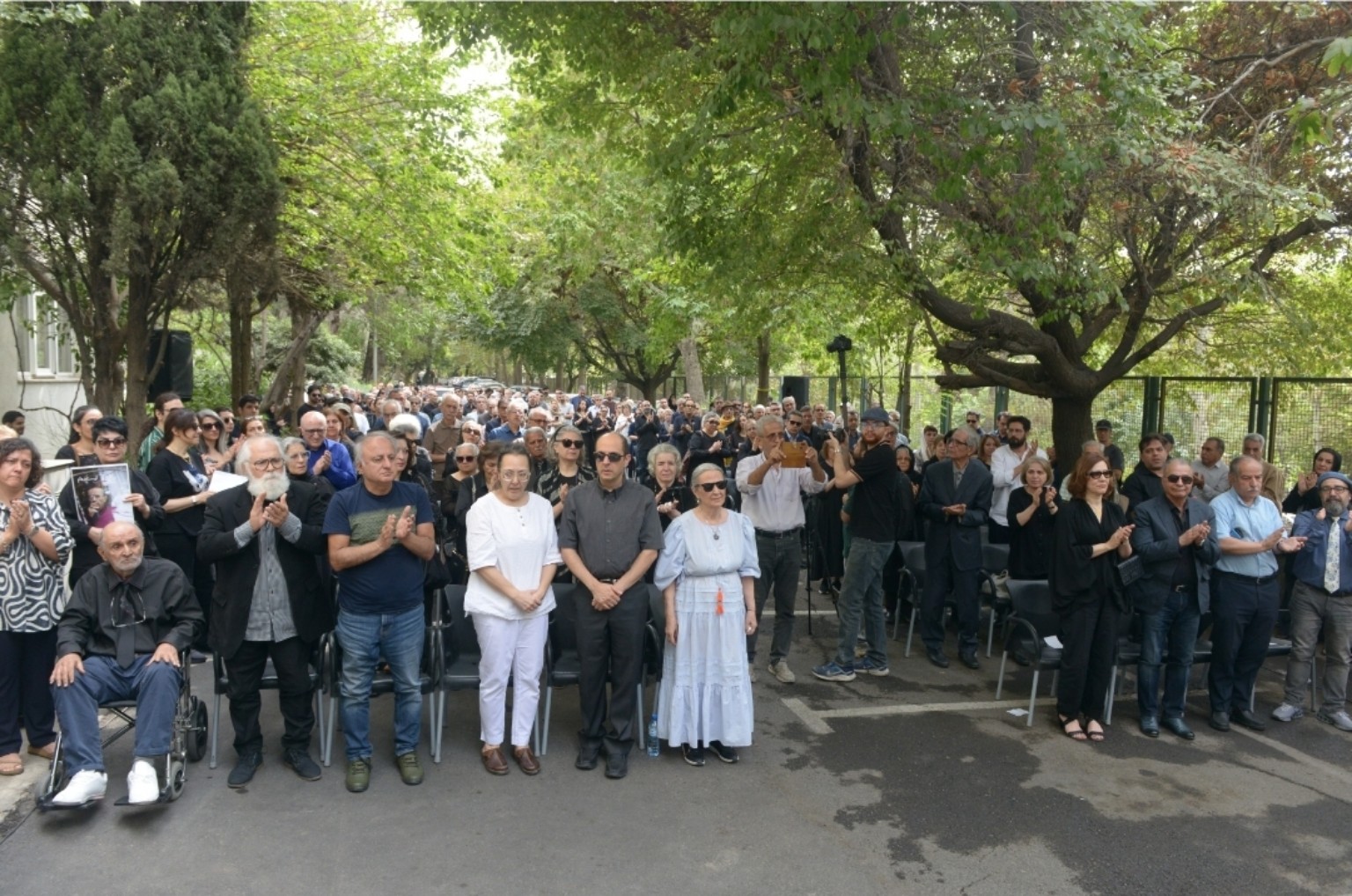
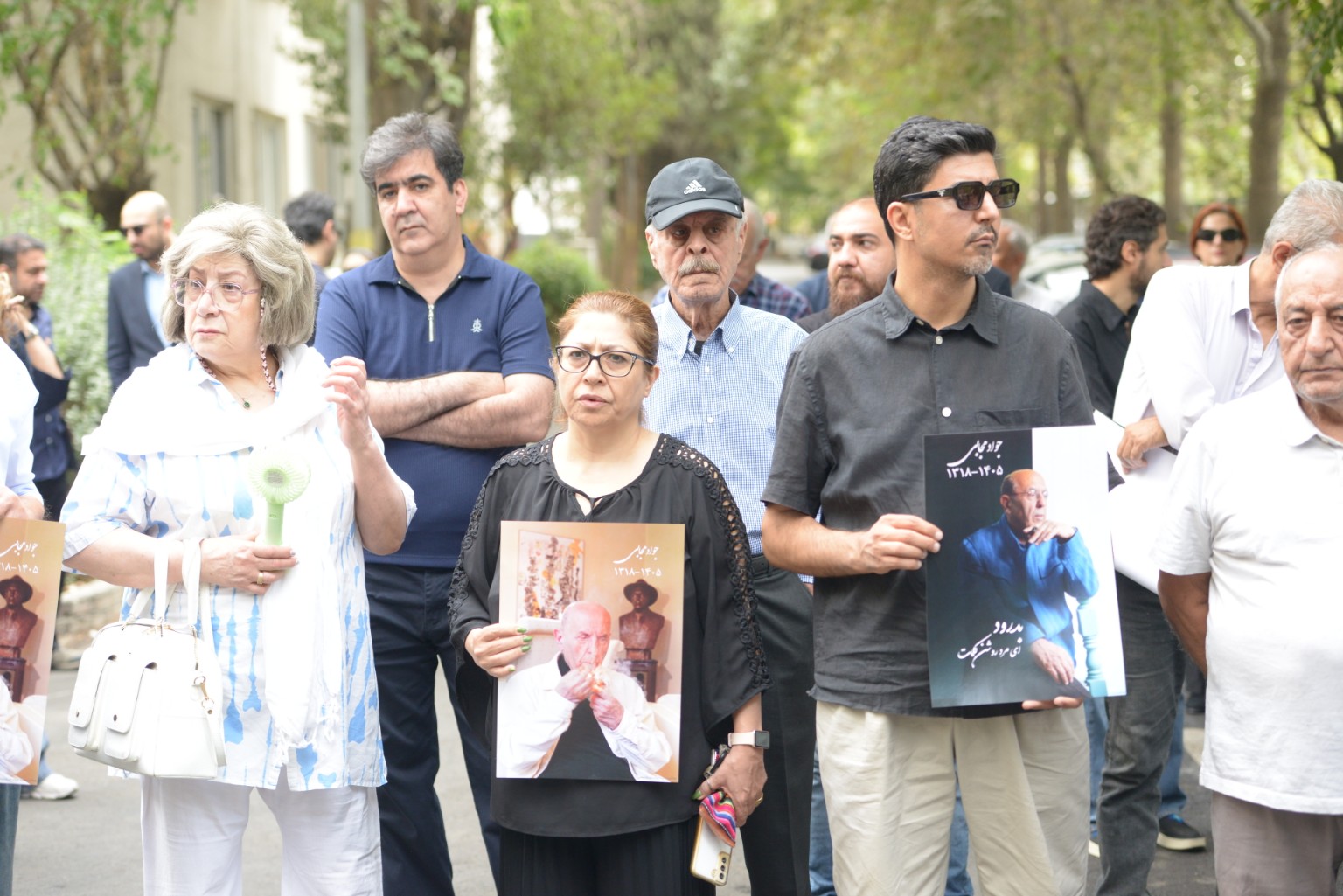
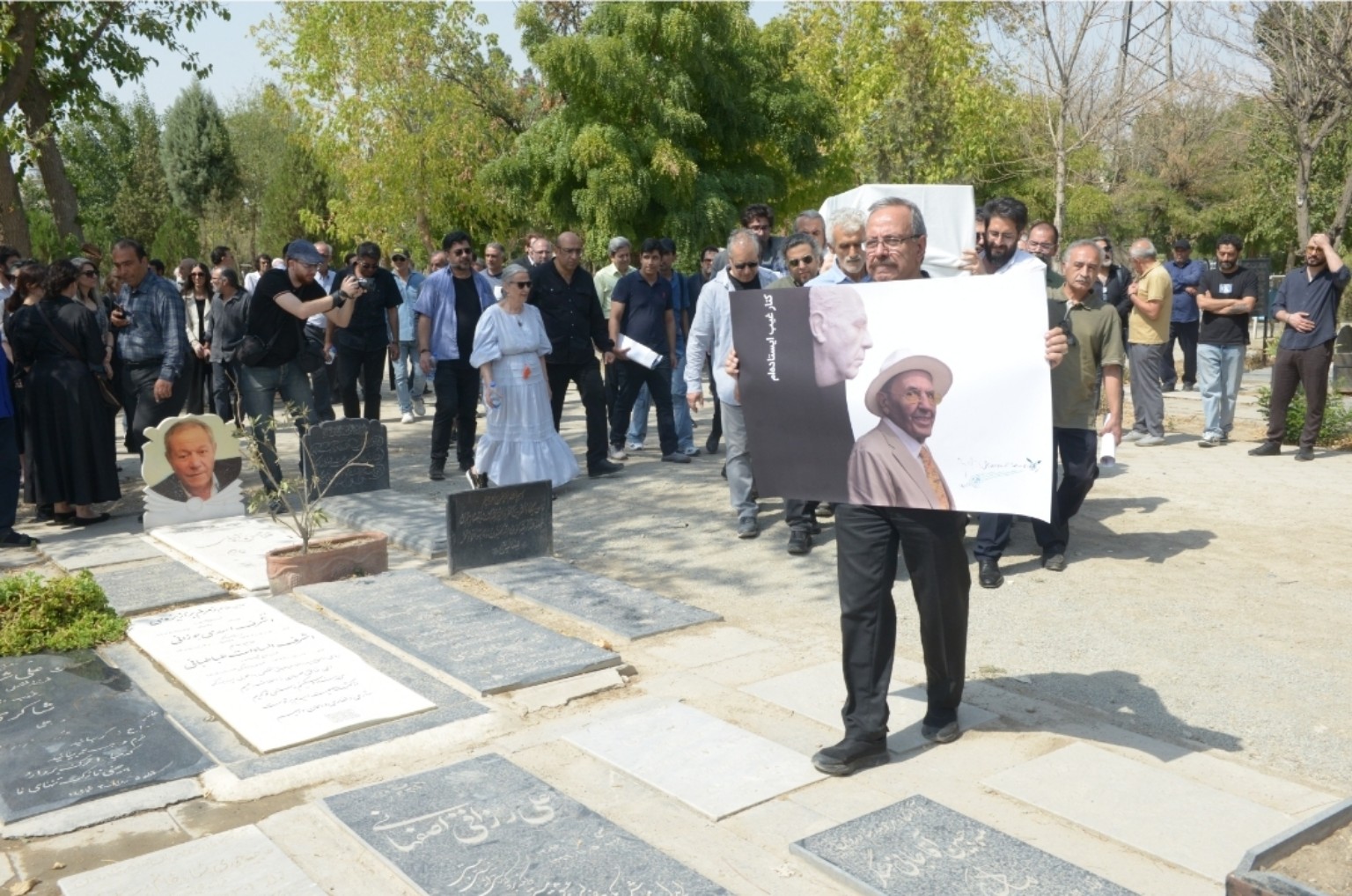
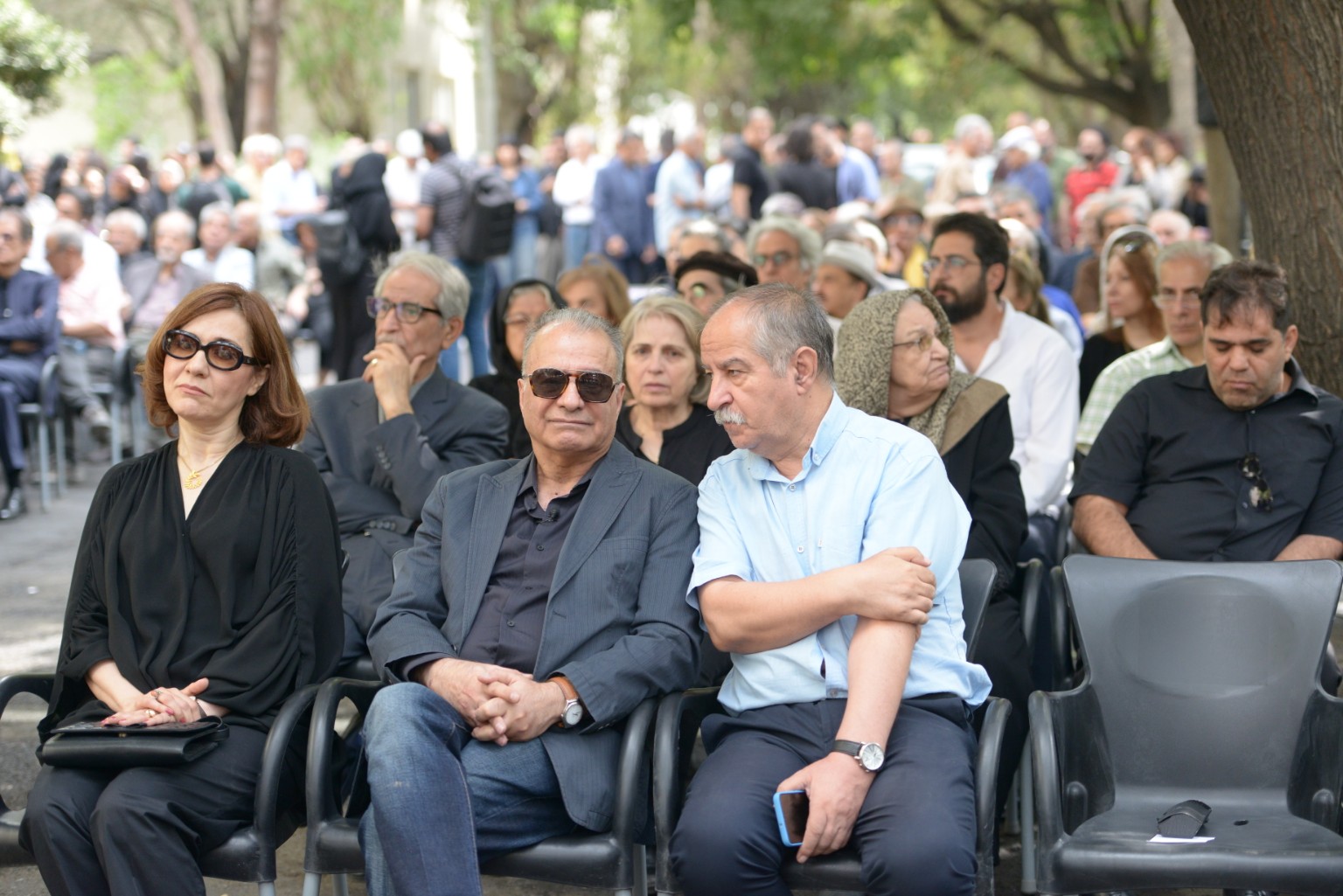
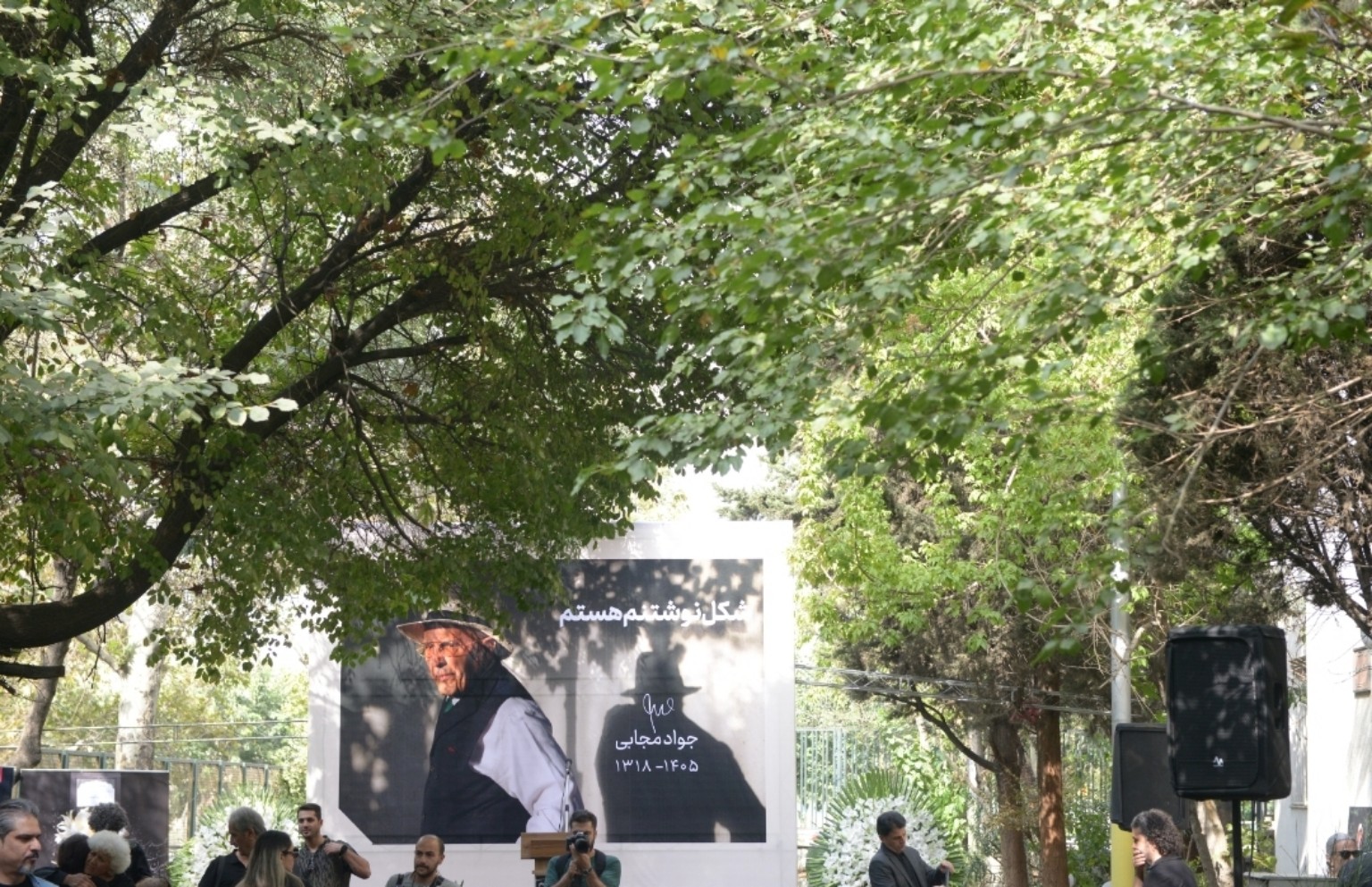
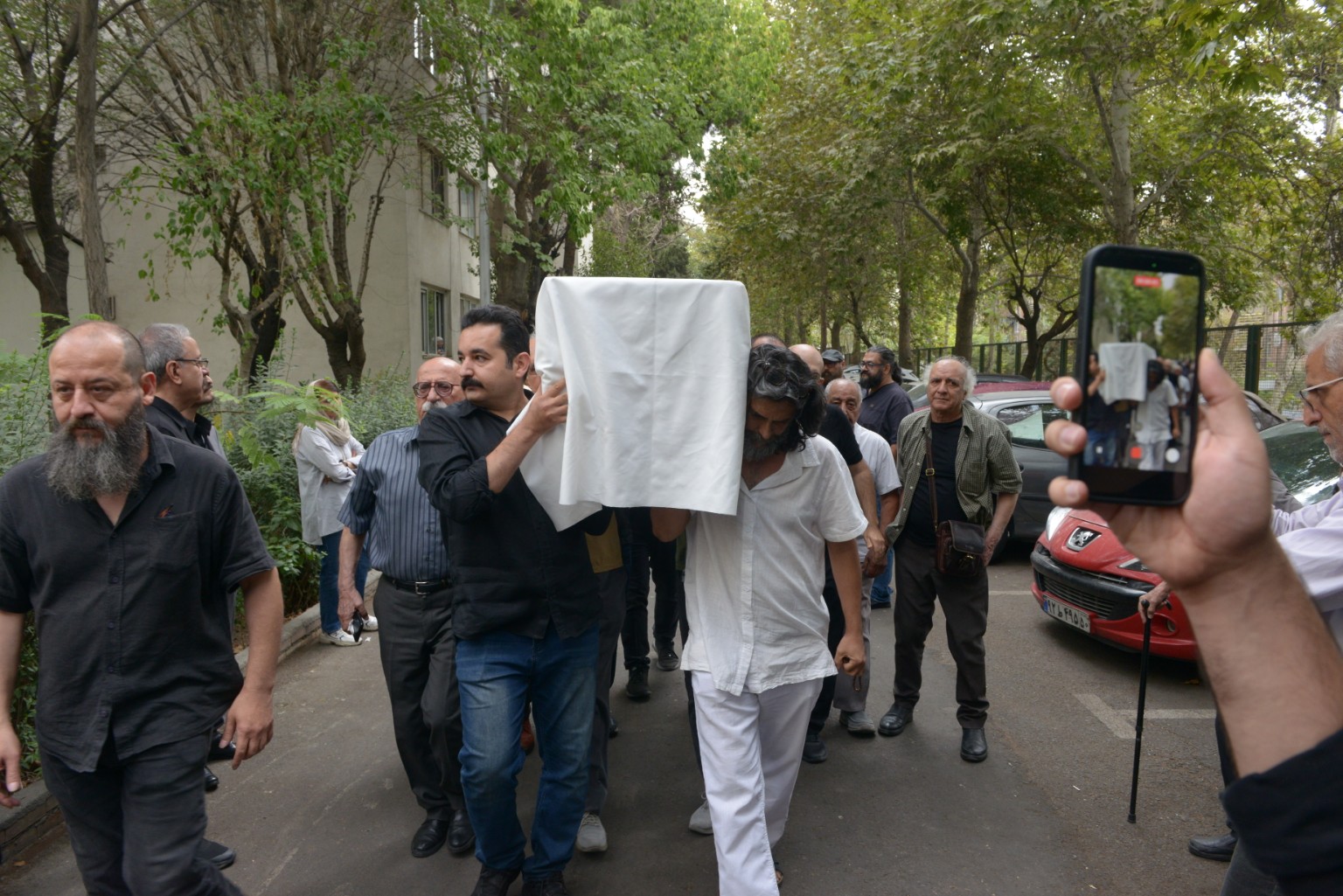
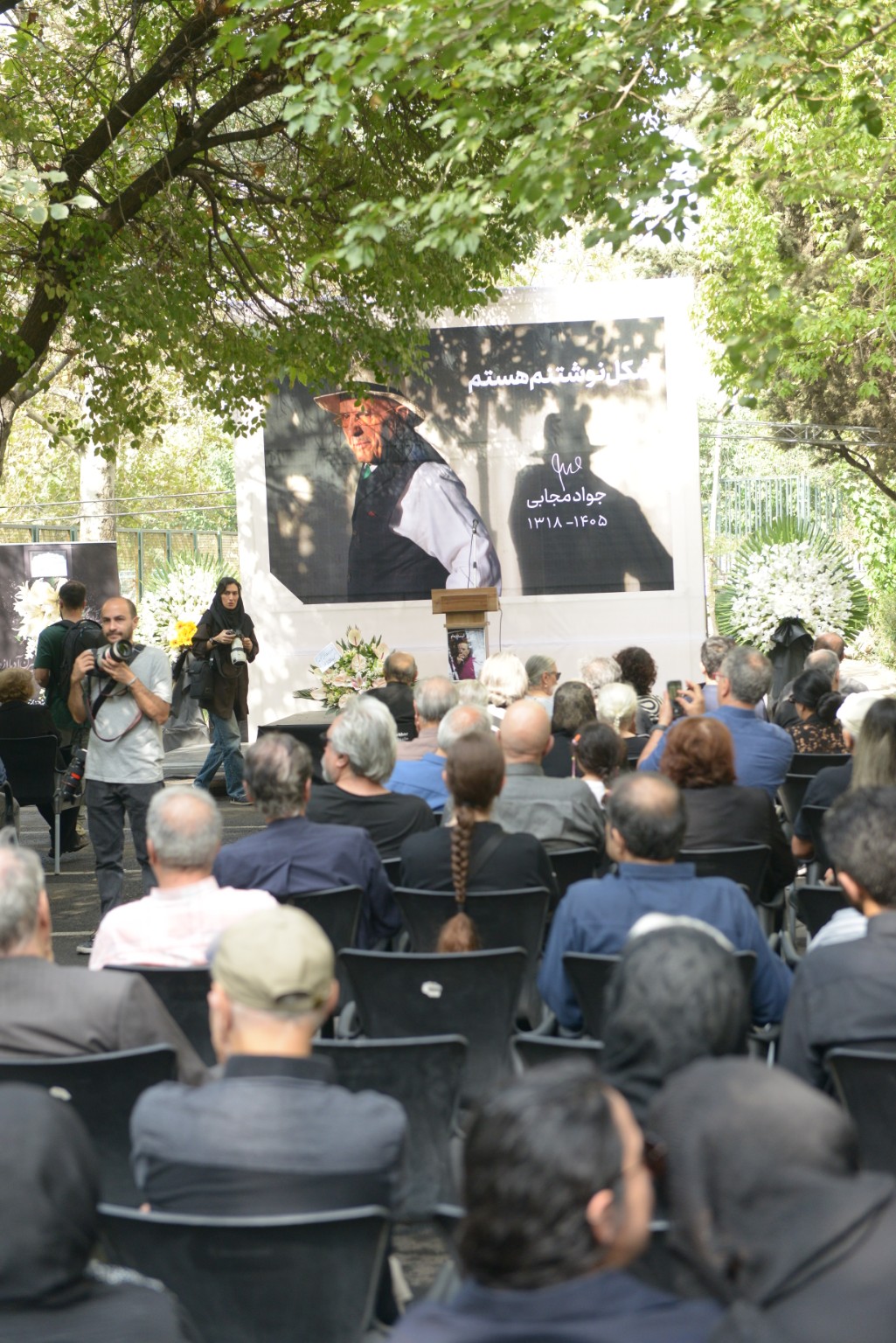
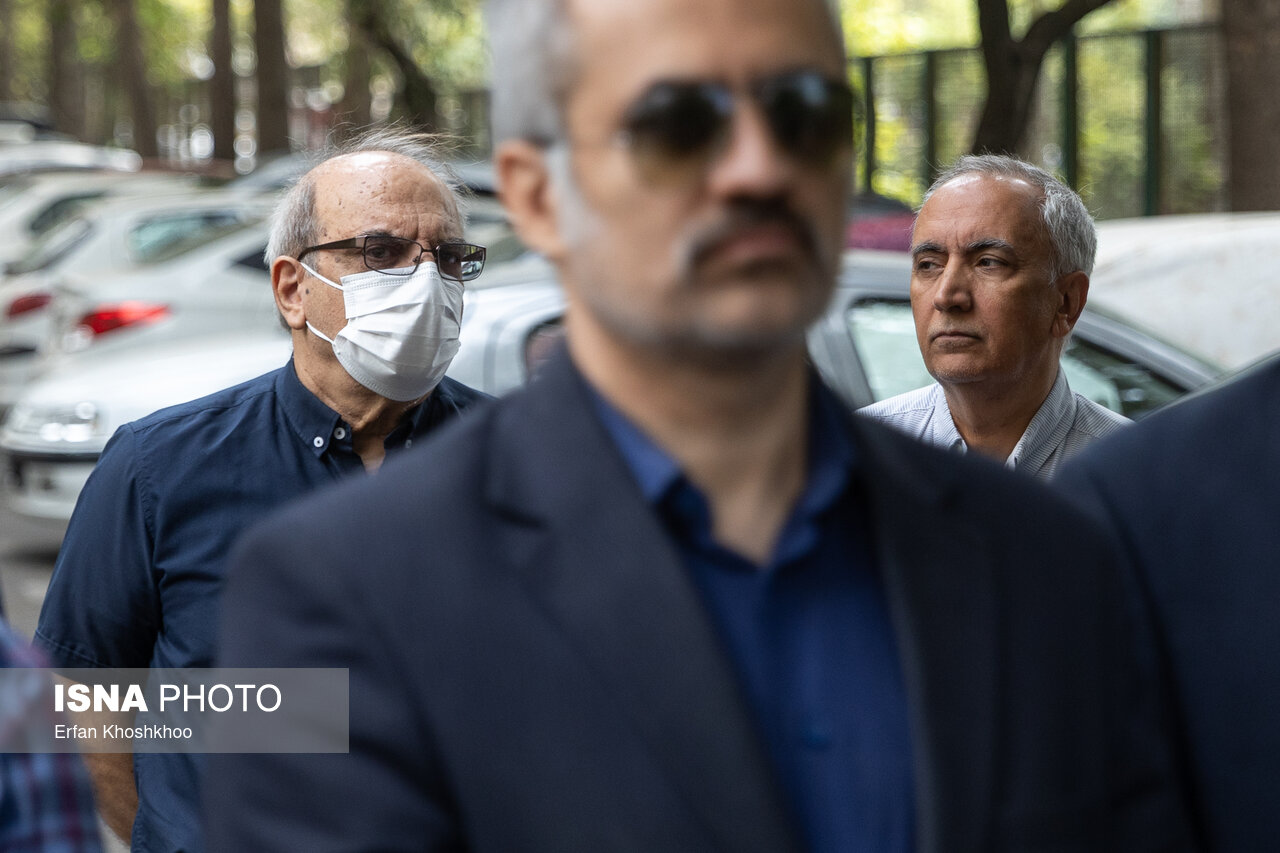
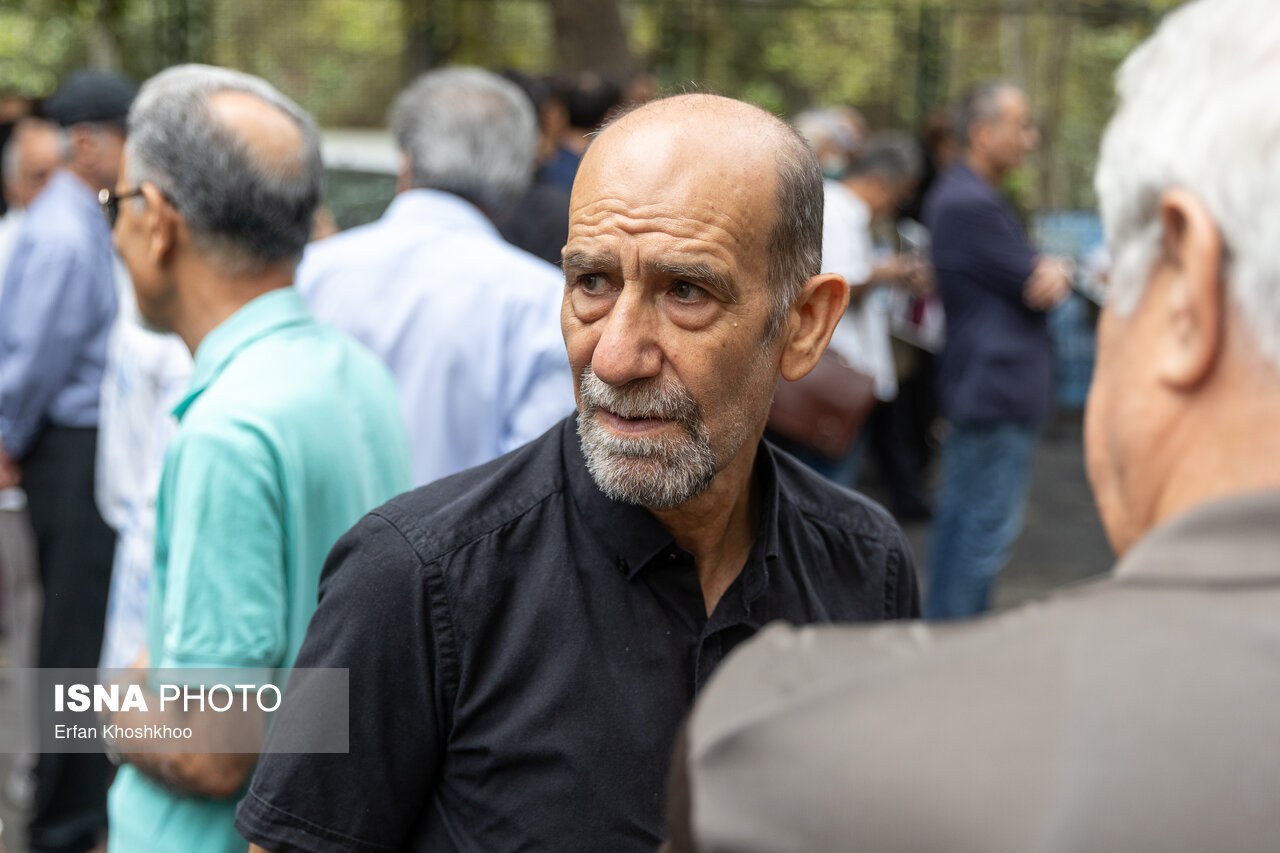
Farewell and burial ceremony photos
Photographs published by Entekhab from the farewell in Tehran’s Writers’ Quarter and the burial at Imamzadeh Taher. Select an image to view the original photo gallery.
International coverage and cultural tributes
Media outlets and cultural organizations outside Iran reported Mojabi’s death and reflected on different aspects of his work. These brief summaries link directly to the original reports; please visit each outlet for the full text.
Obituaries and career retrospectives
Euronews Persian reported on 5 September 2026 that Mojabi had died in Tehran after a period of illness, recalling more than six decades of work in poetry, fiction, satire, painting, and criticism. Radio Farda and Voice of America Persian also reported his death and reviewed his cultural career. Published reports differ in the age they give; this page uses the birth and death dates rather than repeating a disputed age.
Farewell and burial
Iran International reported on the farewell ceremony and Mojabi’s burial at Imamzadeh Taher in Karaj, as well as his place in contemporary Iranian literature and culture.
Javad Mojabi in the realm of word and image
In a bilingual feature published on 7 September 2026, the Owrang Institute of Arts and Culture in Sacramento, California, explored the connection between writing and visual art in Mojabi’s work. The article mentions his final exhibition, The White Nights of the Hospital and Me, and his two-volume study of ninety years of innovation in Iranian visual arts.
His role in documenting modern Iranian art
The Encyclopaedia Iranica entry on Faramarz Pilaram cites Mojabi’s analysis of Pilaram’s artistic periods. The citation is one example of Mojabi’s art criticism and research appearing in English-language scholarly sources.
A note from the National Iranian American Council
On 8 September 2026, the National Iranian American Council (NIAC) published an English-language note on Mojabi’s death and legacy, reviewing more than six decades of work in literature, satire, and the visual arts and the breadth of his published work.
Short fiction republished by an independent literary journal
On 5 September 2026, the independent literary journal Baang, which describes itself as based outside Iran, republished Mojabi’s short story “Hoseleh-ye Rah Raftan.” The story first appeared in Baang in 2020. Its accompanying note discusses his short fiction, novels, and the way satire, social observation, and layered narration shape his work. Read the story and editorial note.
This memorial is based on published sources. It does not reproduce extended quotations from the original reports. Content last compiled on 1 October 2026.